
NAF Reconnaissance Aircraft Scatters ISWAP Fighters During Mass Burial in Malam Fatori
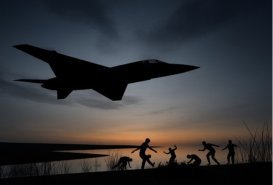
A Nigerian Air Force reconnaissance aircraft flew over fighters of the Islamic State West Africa Province (ISWAP) as they conducted a mass burial for approximately 30 of their comrades, causing the terrorists to scatter in disarray.
The incident occurred yesterday in the Malam Fatori axis along the Lake Chad region in northern Borno State and was captured in video footage that has since circulated widely on social media. It followed precision airstrikes carried out the previous night that targeted ISWAP logistics and mobility networks in the area.
According to official military statements and security sources, intelligence, surveillance and reconnaissance assets detected heightened terrorist activity along waterways near Kaniram Island and Malam Fatori on the night of April 21-22, 2026. Terrorists were reportedly using speed boats and gun trucks for movement and resupply in the challenging Lake Chad terrain.
The Air Component of Operation Hadin Kai responded with coordinated precision strikes that destroyed several boats, disrupted a logistics hub and neutralised over 30 ISWAP fighters. A separate report from the Joint Task Force confirmed the destruction of at least three gun trucks in the vicinity.
Ground forces have since moved to exploit the strikes and establish dominance in adjoining areas. Following the strikes, the reconnaissance aircraft conducted follow-up surveillance over the burial site. Video shows ISWAP members gathered for what appeared to be funeral rites suddenly fleeing as the aircraft approached.
Defence observers described the flyover as a deliberate demonstration of the military’s persistent aerial presence and situational awareness in the region. Such operations serve both intelligence-gathering and psychological purposes. By appearing during a moment of vulnerability for the terrorists, the Nigerian Air Force signals that ISWAP fighters have limited safe spaces, even when attempting to honour their dead. Analysts say this combination of kinetic strikes and visible surveillance can erode insurgent morale and complicate their command decisions.
Malam Fatori, a strategic location near the borders with Niger and Chad, has long been used by ISWAP to exploit the Lake Chad’s islands, creeks and waterways for mobility and evasion. The group has historically relied on these routes for logistics and cross-border activities.
The latest strikes form part of intensified efforts under Operation Hadin Kai, the multi-service campaign against Boko Haram and ISWAP in the Northeast.Nigerian forces have reported repeated successes in degrading terrorist capabilities through intelligence-driven air and ground actions in recent months.
Public reactions on social media have been varied. Many praised the military’s persistence and the psychological impact of the flyover, while others questioned why the reconnaissance platform did not immediately transition to a strike or why armed assets were not positioned to engage the dispersing fighters.
However, military sources have emphasised that all actions comply with established rules of engagement and that post-strike exploitation by ground troops remains ongoing.
The episode highlights the evolving tactics of the Nigerian Air Force, which increasingly combines precision strikes with persistent surveillance to maintain pressure in a difficult operating environment. The Lake Chad basin’s geography – vast waters, islands and limited infrastructure – has traditionally favoured insurgents, but sustained aerial operations are gradually shifting the balance.
ISWAP has suffered notable losses in the area recently, although the group continues to attempt attacks and regroup. Operations like the one in Malam Fatori aim to prevent consolidation and disrupt the terrorists’ ability to move freely or conduct large gatherings.
The Nigerian military has reiterated its commitment to offensive actions while calling on civilians in affected communities to provide timely intelligence and steer clear of terrorist-controlled zones. As Operation Hadin Kai progresses, the integration of air and ground efforts, supported by real-time intelligence, continues to target ISWAP’s logistics backbone along Lake Chad.
The latest incident sends a clear signal that the group faces relentless scrutiny, with few locations truly safe for recovery or regrouping. Broader efforts to restore stability in Borno State remain challenging after years of insurgency that have displaced communities and caused significant loss of life.
