
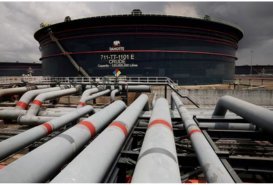
Aliko Dangote Commits to Building 650,000 bpd Refinery in Tanga, Tanzania, to Boost Regional Energy Security
Aliko Dangote, Africa’s wealthiest industrialist, has given a firm commitment to construct a 650,000 barrels-per-day oil refinery in Tanga, Tanzania – an exact replica of his flagship facility in Nigeria – as part of a broader East African initiative to strengthen energy security and promote industrial growth.
The pledge came on April 23, 2026, during a high-level presidential panel at the inaugural Africa We Build Summit hosted by the Africa Finance Corporation in partnership with the Kenyan government at the JW Marriott Hotel in Nairobi.
Kenyan President William Ruto, who shared the platform with Ugandan President Yoweri Museveni and Dangote, confirmed that Kenya, Uganda and Tanzania are actively engaged in discussions for the joint project. Ruto made the regional ambition clear: “We’re going to have a joint refinery in Tanga to benefit all of us. That refinery is going to take on board the oil from DRC, the oil from Kenya, the oil from South Sudan, and the oil from Uganda.” A dedicated pipeline would link the Tanga facility to Mombasa, allowing refined products to flow through Kenya’s existing pipeline infrastructure.
Dangote was unequivocal in his offer. “I can give commitment to the two presidents that were here; if they will support the refinery, we’ll build the identical one that we have in Nigeria – 650,000 barrels per day,” he declared. He added that, with strong governmental backing from the participating countries, the project could be delivered within four to five years.
The announcement arrives at a pivotal time for East Africa. The region is ramping up oil production, particularly through the East African Crude Oil Pipeline that terminates at Tanga, yet it remains heavily reliant on imported refined petroleum products. Global supply disruptions, including recent tensions in the Middle East, have exposed this vulnerability and underscored the need for local refining capacity.
Dangote’s refinery in Nigeria, Africa’s largest with an investment of over $20 billion, reached full commercial operations earlier in 2026 and has already begun exporting fuels to other parts of the continent. The proposed Tanga facility would follow the same large-scale model, aiming to shift East Africa from a net importer to a potential net exporter of refined products.
During the panel discussion, Dangote stressed the importance of value addition across the continent. He praised President Museveni’s decision to ban raw mineral exports from Uganda and urged African nations to move away from exporting raw materials that create jobs and wealth abroad. Instead, he called for investment in local processing, petrochemical industries and manufacturing to generate sustainable employment and broader economic benefits.
The Africa We Build Summit, held under the theme “Infrastructure as the Engine of Industrialisation,” focused on converting plans into bankable projects. It brought together heads of state, finance ministers, institutional investors and private sector leaders to mobilise domestic capital and accelerate cross-border infrastructure development.
If successfully implemented, the Tanga refinery could deliver multiple strategic advantages: greater energy security by reducing dependence on volatile international fuel imports; deeper regional economic integration through the East African Crude Oil Pipeline and existing distribution networks; the creation of thousands of direct and indirect jobs; increased government revenues through taxes, royalties and export earnings; and potential spillover effects into petrochemical production, fertiliser manufacturing and other industrial activities.
Dangote positioned the Dangote Group as a willing anchor investor, ready to lead the project provided the governments deliver clear policy support, land allocation, regulatory approvals and effective cross-border cooperation — the same enabling environment he credited for the success of the Nigerian refinery.
While the announcement has generated considerable optimism across the region, significant challenges lie ahead. These include finalising multi-country agreements on cost-sharing and equity participation, mobilising the enormous financing required in a difficult global environment, addressing environmental and community concerns around the Tanga site, and ensuring consistent, investor-friendly policies across the participating nations.
Informed observers caution that the project’s success will ultimately depend on strong political will and the ability to replicate the supportive framework that allowed the Nigerian refinery to overcome early setbacks.
The proposed Tanga refinery represents one of the most ambitious infrastructure initiatives in recent East African history. If realised, it would not only enhance energy independence but also send a powerful signal to global investors that Africa is determined to move from raw resource extraction toward high-value industrialisation. The initiative also aligns with wider African Union objectives for economic integration and could serve as a model for similar collaborative projects in other parts of the continent.
The Africa We Build Summit concluded on April 24 with renewed emphasis on domestic capital mobilisation and rapid project execution. Dangote’s concrete pledge has emerged as one of the summit’s most tangible outcomes. As discussions continue, stakeholders across East Africa will be watching closely to see whether this ambitious vision translates into ground-breaking progress for the region’s energy and industrial future.
