
International Women’s Day 2026: UN Leaders Call for Urgent Action on Rights, Justice and Equality Amid Global Backlash
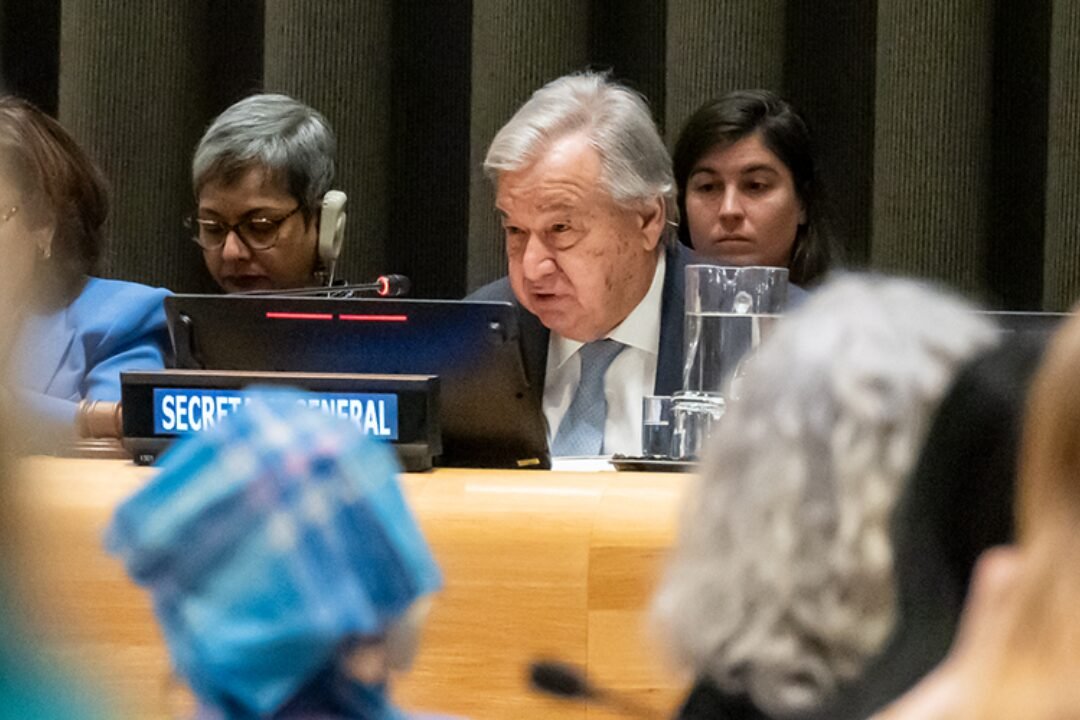
To observe International Women’s Day 2026, United Nations Secretary-General António Guterres and UN Women Executive Director Sima Bahous have issued stark warnings that gender equality is under severe threat worldwide, even as hard-won legal and social advances face organized rollback in many countries.
This year’s theme, Rights. Justice. Action for All Women and Girls, comes at a moment of stark contradiction: progress coexists with accelerating regression.
Message from Secretary-General António Guterres
Secretary-General António Guterres highlighted the stark legal inequality that continues to shape women’s lives globally:
“Worldwide, women hold just 64 per cent of the legal rights enjoyed by men. Legal discrimination can shape every aspect of a woman’s life. She may be prevented from owning property, seeking a divorce, or taking a job without her husband’s permission. In more than 40 countries, marital rape is not recognised as a crime. Other laws restrict women’s access to education, their ability to pass on citizenship to their children, or even their freedom of movement outside the home.”
He pointed to a dangerous new trend: amid rising authoritarianism, political instability and a renewed push to entrench patriarchy, advances in fairer work protections and sexual and reproductive rights are being actively reversed. “Where legal protections do exist, discrimination and weak enforcement mean women still struggle to access courts and legal support,” he added.
Guterres called for urgent collective action to deliver on the promise of the Sustainable Development Goals and the Beijing+30 Action Agenda. “By fighting discriminatory laws and practices — and defending the progress already achieved — we can ensure the dignity, opportunity and freedom all women deserve,” he said. “When we are not equal under the law, we are not equal. It is time to make justice a reality for women and girls, everywhere.”
Message from UN Women Executive Director Sima Bahous
UN Women Executive Director Sima Bahous struck a similarly urgent tone in her message, acknowledging historic gains while warning of organised backlash:
“We have never been so close to achieving gender equality, and never closer to losing it. Today, stronger laws exist on domestic violence. More girls are in school than ever before. Women’s movements are more connected, more visible, and more crucial than ever before.”
Yet she described the current moment as one of contradiction: violence is rising, including online; backlash is organized and well-resourced; rights are being reversed in real time and at unprecedented speed; impunity is spreading in homes, online and in conflicts.
“International Women’s Day 2026 must be our collective turning point,” Bahous said. “We must stand up, show up, and speak up, for rights, justice, action, so all women and girls can live safely, speak freely, and exist equally.”
She reaffirmed UN Women’s role in crisis zones, courtrooms, grassroots movements and global power structures, supporting women’s movements and survivors of violence everywhere. Bahous closed with a direct call to action:
“Break the silence. Demand rights and justice. Defend the rule of law. Fund women’s rights movements. End impunity. Deliver equality, in laws, in life, everywhere.”
Global Context and Future Outlook
The messages arrive against the backdrop of a global rollback of women’s rights in multiple regions, including restrictions on reproductive health, education access, political participation and protection from gender-based violence. Both leaders stressed that legal equality remains foundational: without it, meaningful progress in any other area is impossible.
UN observances this year are expected to focus on accelerating implementation of the Beijing Declaration and Platform for Action (Beijing+30) and integrating gender equality into the final push toward the 2030 Sustainable Development Agenda. High-level events at UN Headquarters in New York and regional gatherings worldwide will centre on translating rhetoric into concrete action.
Nigeria: The Special Seats Bill and Regional Dynamics
In Nigeria, the long-debated Gender and Equal Opportunities Bill (often referred to as the “Special Seats Bill”) remains stalled in the National Assembly. The proposed legislation seeks to reserve a proportion of legislative seats for women but has repeatedly failed to secure the required two-thirds majority for constitutional amendment.
As the renewed campaign gains traction via promotions on local media with high profile endorsements, informed observers argue that the bill lacks critical details on implementation – most notably which sections of the country would be subject to strict female representation quotas and how such quotas would be enforced without violating federal character principles or creating new forms of regional imbalance.
Proponents view the bill as necessary affirmative action to address the severe under-representation of women in politics (currently below 7% in the National Assembly). Opponents, including some women’s rights advocates, describe it as “profitable agitation” that benefits political elites more than ordinary women, pointing to the absence of enforceable mechanisms for accountability, funding, or grassroots participation.
Without consensus on these fundamentals, the bill is widely seen as symbolic rather than transformative.
Across Africa, similar quota systems have produced mixed results. Rwanda leads globally with over 61% women in parliament thanks to constitutional quotas, while countries such as Senegal (43%) and South Africa (46%) have achieved significant gains through party-level commitments and legal frameworks. Yet in many nations – including Nigeria – progress remains slow, hampered by patriarchal party structures, financial barriers to women candidates, and resistance to mandatory quotas perceived as undermining merit.
The UN leaders’ messages on IWD 2026 resonate strongly in this context: legal equality is foundational. Without clear, enforceable mechanisms – whether through quotas, funding reform, or party-level commitments – symbolic gestures risk becoming “profitable agitation” rather than genuine structural change.
