
Khartoum Presents Intelligence Linking UAE and Ethiopia to Strategic Drone Strikes
Sudanese authorities have directly accused the United Arab Emirates and Ethiopia of involvement in drone strikes that targeted Khartoum International Airport and nearby military installations, marking a sharp escalation in the country’s nearly three-year civil war and raising fears of wider regional instability in the Horn of Africa.
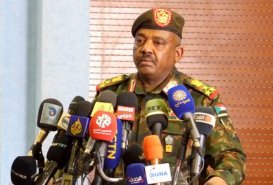
At a press conference yesterday, Sudanese Armed Forces (SAF) spokesperson Brig. Gen. Asim Awad Abdelwahab presented what officials described as military intelligence linking the attacks to Ethiopian territory and UAE-linked equipment. The strikes occurred on the same day, hitting areas near the airport, the Signal Corps in Bahri (north of the capital), and the Al-Markhiyat camp north of Omdurman.
Sudanese officials displayed drone wreckage, flight path maps showing trajectories from Ethiopia’s Bahir Dar Airport, and other evidence they said pointed to external aggression in support of the Rapid Support Forces (RSF), the paramilitary group fighting the army.
No immediate casualties or major damage were officially confirmed, but the airport was closed for 72 hours as a precaution. Foreign Minister Mohi El-Din Salem strongly condemned the incidents as “aggression” and announced the immediate recall of Sudan’s ambassador to Ethiopia for consultations. He said Sudan was prepared for an “open confrontation” if necessary, while stressing that any response would be proportional.
SAF spokesperson Gen. Abdelwahab echoed this position, vowing that the armed forces would “respond twice as hard.” Sudan also indicated it would raise the matter at the United Nations regarding alleged UAE involvement.
The accusations come against the backdrop of Sudan’s bitter conflict between the SAF, led by Gen. Abdel Fattah al-Burhan, and the RSF, commanded by Gen. Mohamed Hamdan Dagalo (Hemedti).
The war, which began in April 2023, has killed tens of thousands, displaced millions and triggered one of the world’s worst humanitarian crises, with widespread famine risks. Both sides have increasingly turned to drones in recent months, with strikes on civilian areas drawing repeated UN condemnation.
Sudanese officials have long accused the UAE of arming and supporting the RSF, a charge Abu Dhabi has consistently denied. The latest claims add Ethiopia to the picture, suggesting its territory was used as a launchpad. This is not the first time Sudan has pointed fingers at its neighbours.
In March, Khartoum publicly accused Ethiopia of allowing cross-border drone activity. The recall of the ambassador signals a serious diplomatic rupture, potentially following Sudan’s earlier decision to sever ties with the UAE. As of the time of filing this report neither Ethiopia nor the UAE had issued detailed responses to the latest allegations.
The situation remains fluid, with analysts warning that further escalation could draw in other regional players, including Eritrea and Egypt, which have their own strategic interests in the Horn of Africa. The conflict has complicated peace efforts, with mediation initiatives through IGAD and the African Union largely stalled.
Regional rivalries, particularly over Nile water resources and Red Sea ports, have added layers of complexity to an already intractable war. For ordinary Sudanese, the latest developments bring fresh anxiety.
The capital and surrounding areas have seen fluctuating control, with relative calm in recent weeks shattered by the drone incidents. The humanitarian toll continues to mount, with millions displaced and basic services severely disrupted. Sudan’s military has emphasised its readiness to defend national sovereignty.
However, observers note that broadening the conflict to include direct foreign involvement risks prolonging the suffering and making any negotiated settlement even more difficult. The international community faces renewed pressure to address allegations of external interference while pushing for an immediate ceasefire and humanitarian access.
