
Oil Holds Above $100 as Markets Balance Trump’s Shipping Aid Against Persistent Geopolitical Risks
Oil prices eased slightly in early Asian trading on Monday after US President Donald Trump said Washington would begin operations to assist vessels stranded in the Strait of Hormuz, though persistent uncertainty over a potential peace deal between the United States and Iran kept the market supported well above the $100 per barrel level.
According to a Reuters, Brent crude futures declined 6 cents, or 0.1 percent, to $108.11 per barrel, while US West Texas Intermediate crude fell 44 cents, or 0.4 percent, to $101.50 per barrel. The modest pullback followed sharper losses on Friday as traders weighed the latest diplomatic developments against ongoing supply risks in the Gulf.
Trump’s announcement on Sunday that the United States would help guide ships safely out of the strategic waterway provided some relief to markets concerned about prolonged disruptions.
However, observers caution that without a comprehensive resolution to the conflict, shipping constraints are likely to persist, supporting elevated price levels. “The broader market remains tightly supported by persistent supply disruptions and geopolitical uncertainty,” said Priyanka Sachdeva, analyst at Phillip Nova. “Unless there is a clear and sustained resolution that restores normal flows through the Strait of Hormuz, oil prices are likely to remain elevated, with risks still tilted toward further upside.”
Negotiations between Washington and Tehran continued over the weekend, with both sides assessing responses to proposals aimed at de-escalating the conflict. Iranian state media reported that Tehran was reviewing a US reply to its 14-point proposal conveyed through Pakistan.
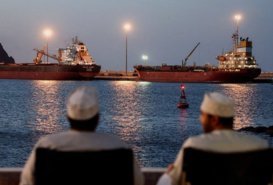
Iran has indicated it wants to address the lifting of blockades on Gulf shipping before engaging in broader nuclear talks. The Strait of Hormuz, a critical chokepoint between Iran and Oman through which about one-fifth of global oil and liquefied natural gas shipments normally pass, has seen severely restricted traffic since the escalation of the US-Israeli military campaign against Iran in late February. A tanker was reportedly hit by unknown projectiles in the area on Monday, according to a maritime security organisation, further underscoring the risks to shipping.
In a related development, OPEC+ agreed on Sunday to raise oil output targets by 188,000 barrels per day in June for seven member countries – the third consecutive monthly increase since the Hormuz disruptions began. The adjustment comes after the United Arab Emirates formally left OPEC on May 1, meaning the higher volumes will largely remain theoretical as long as Gulf exports stay constrained.
The latest price action reflects a market balancing hopes of improved shipping conditions against the reality of continued geopolitical risks and tight physical supplies. Oil prices have remained above $100 per barrel for several weeks, driven by fears of prolonged disruptions in one of the world’s most important energy arteries.
The UAE’s exit from OPEC has added another layer of complexity to the global oil landscape. As one of the cartel’s major producers with substantial spare capacity, the country is now free from quota restrictions and could ramp up output more aggressively once normal shipping resumes.
This development has widened existing differences with Saudi Arabia and raised questions about the long-term cohesion of the producers’ group. For consumers and businesses worldwide, sustained high oil prices are feeding into broader inflation pressures, complicating monetary policy decisions in major economies.
The conflict has also disrupted supply chains and increased costs for energy-intensive industries. Market participants are closely monitoring diplomatic efforts for any signs of a breakthrough. Trump has made securing a nuclear agreement with Iran a priority, though Tehran appears keen to resolve immediate maritime security issues first. Any meaningful de-escalation that restores safe passage through the Strait of Hormuz could ease price pressures, while further incidents or prolonged stalemate would likely keep crude markets volatile and elevated.
The current environment highlights the fragile balance in global energy markets. Even as OPEC+ attempts to adjust output targets, real-world production and export capacity remain heavily constrained by the security situation in the Gulf. Analysts expect trading to remain cautious in the coming days, with attention focused on any concrete progress in US-Iran talks and the operational status of shipping lanes.
The combination of geopolitical risk premium and actual supply tightness continues to underpin prices, even as short-term relief from Trump’s announcement provided some downward pressure. As the situation evolves, the interplay between diplomacy, military developments and energy flows will remain central to price direction. For now, the market appears to be pricing in cautious optimism around improved shipping conditions while remaining wary of setbacks.
