
Rubio Challenges UN Relevance as Washington Seeks Resolution Against Iranian Maritime Attacks
US Secretary of State Marco Rubio has called on the United Nations Security Council to adopt a resolution condemning Iran’s continued disruptions in the Strait of Hormuz, describing the situation as a critical test of the international body’s relevance in addressing threats to global commerce and security.
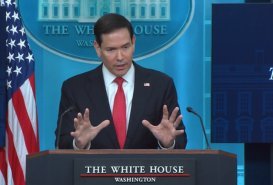
Speaking from the White House on Tuesday, Rubio urged the UN to demand that Iran immediately halt attacks on commercial vessels, remove sea mines, stop imposing illegal tolls and establish a humanitarian corridor in the strategically vital waterway.
The proposed resolution, backed by the United States and several Gulf states, comes amid ongoing tensions following the fragile ceasefire in the broader US-Israel-Iran conflict. “We’re asking the UN to call on Iran to stop blowing up ships, remove the mines, and allow humanitarian relief,” Rubio said. “If the international community can’t rally behind this and solve something so straightforward, then I don’t know what the utility of the UN system is.”
The Strait of Hormuz, a narrow passage between the Persian Gulf and the Gulf of Oman, is one of the world’s most important energy chokepoints, carrying roughly one-fifth of global crude oil and liquefied natural gas shipments. Iranian actions, including attacks on vessels, mining operations and attempts to levy tolls, have severely restricted traffic and raised international alarm.
The latest push follows a fragile ceasefire that took hold in April after US strikes under “Operation Epic Fury” in late February. Despite the truce, Iran has persisted with asymmetric tactics in the strait, including drone and missile strikes on ships and interference by small boats. The US has responded by escorting vessels under “Project Freedom,” sinking several Iranian boats involved in harassment and reporting safe passages for American-flagged ships.
The draft resolution is introduced under Chapter VII of the UN Charter, which allows for stronger enforcement measures. It demands that Iran cease all hostile activities, disclose mine locations for clearance operations and cooperate on establishing a humanitarian corridor for aid and essential goods.
It also reaffirms the right of nations to defend their vessels and warns of “effective measures,” including potential sanctions, for non-compliance. Adjustments were made to the text to reduce the likelihood of vetoes from China and Russia, which blocked a similar earlier effort. The resolution is co-sponsored by the US, Bahrain and other Gulf states including Saudi Arabia, the UAE, Kuwait and Qatar.
Rubio stressed that the US is not seeking military commitments from other nations, only diplomatic support and practical cooperation on clearing mines and ensuring safe passage. He described Iran’s actions as “criminal” and unlawful under international law, which protects freedom of navigation in such international waterways.
The economic impact of the disruptions has been significant. Stranded vessels, delayed fertilizer shipments and soaring oil prices – which briefly exceeded $100 per barrel – have affected global markets, contributing to higher energy costs and supply chain pressures.
Airlines have faced fuel shortages, and food security concerns have grown in import-dependent regions.
Sudan’s recent accusations of UAE and Ethiopian involvement in drone strikes on Khartoum add another layer of regional complexity, though the focus remains on Hormuz as the primary flashpoint for global energy security.
Informed observers expect inaction which would further undermine perceptions of the UN’s effectiveness in managing contemporary conflicts. The vote on the resolution could come within days and pssage would mark a diplomatic victory for Washington and its Gulf partners, while a veto or deadlock would likely intensify criticism of the international system’s capacity to address such crises.
