
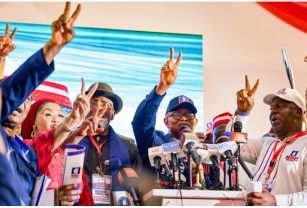
NDC Finalizes Compressed May Timetable; Introduces Major Form Discounts for Women
The Nigeria Democratic Congress (NDC) has released a detailed timetable and fee structure for its 2027 primaries, becoming one of the first major political parties to begin formal preparations for next year’s general elections.
According to an official press statement issued on Tuesday by the party’s National Chairman, Senator Moses Cleopas Zuwoghe, and National Secretary, Barrister Ikenna Morgan Enekweizu, the process commences immediately with the sale of Expression of Interest forms and emphasises transparency, internal democracy and broader participation.
This early move places the relatively new party ahead of the Independent National Electoral Commission’s regulatory timeline and signals its intention to differentiate itself from more established parties through structured organisation and reduced financial barriers.
The entire primary process is scheduled to conclude by the end of May 2026, well before the national electoral body’s deadlines for candidate submissions. The NDC timetable is tightly compressed but clearly defined.
Sale of Expression of Interest forms runs from Wednesday, May 13 to Monday, May 18. Screening and interviews of aspirants will follow from Tuesday, May 19 to Thursday, May 21, serving as a mandatory step before the purchase of Nomination forms.
Sale of Nomination forms is set for Thursday, May 21 to Saturday, May 23, with completed forms due for submission by Monday, May 25.
Appeals on screening outcomes will be heard on May 25 and 26. Primary elections for State Houses of Assembly, National Assembly and Governorship positions are scheduled for Wednesday, May 27 and Thursday, May 28, while the Presidential primary will take place on Friday, May 29 in Abuja.
Screening for State Assembly aspirants will occur at the state level, whereas National Assembly and presidential candidates will be screened at the party’s national headquarters. Governorship primaries will be conducted at the local government level and all aspirants are required to sign an undertaking to abide by the party’s code of conduct.
The party has adopted the open secret ballot system for its primaries, which it believes will enhance credibility and allow genuine expression of preference among delegates. According to it, this approach is intended to reduce manipulation and strengthen internal democratic processes.
One of the most notable aspects of the announcement is the relatively modest fee structure, which the NDC describes as among the lowest in the country. Fees are divided into Expression of Interest and Nomination components, with screening required before aspirants can buy the full Nomination form. This two-tier system is designed to identify serious candidates early and minimise financial risk for those who may not advance.
For State House of Assembly positions, the Expression of Interest form costs N1 million and the Nomination form N1.5 million, for a total of N2.5 million. House of Representatives aspirants will pay N2 million for the Expression of Interest and N4 million for Nomination, totalling N6 million. Senate hopefuls face N3 million and N5 million respectively, for a combined N8 million. Governorship aspirants will pay N10 million for the Expression of Interest and N20 million for Nomination, amounting to N30 million.
The Presidential category requires N20 million for Expression of Interest and N40 million for Nomination, for a total of N60 million. To promote wider participation, the party has introduced significant discounts. Female aspirants will receive a 50 percent reduction across all categories, while persons living with disabilities will enjoy a 25 percent discount.
These concessions apply uniformly and are part of deliberate efforts to improve gender equity and inclusion in Nigerian politics. Aspirants must also submit relevant credentials and supporting documents during screening.
The NDC, which was registered with INEC earlier in 2026, is positioning itself as a credible alternative amid public dissatisfaction with the ruling All Progressives Congress and the main opposition People’s Democratic Party.
The party recently zoned its presidential ticket to Southern Nigeria for a single four-year term to promote regional balance. By announcing its timetable shortly after INEC released the revised 2027 election schedule, the NDC aims to demonstrate seriousness and organisational readiness.
In contrast to higher fees charged by some other parties, such as the reported N100 million for presidential nomination forms in the APC, the NDC’s structure is expected to attract a broader pool of aspirants, including those from grassroots backgrounds.
Political observers note that early primaries give the NDC an advantage in candidate selection and internal unity, potentially allowing more time for campaign strategy development. The open secret ballot system, if implemented effectively, may serve as a model for other parties considering reforms to their own processes.
The inclusion measures for women and persons with disabilities align with broader national conversations on equitable representation. If successful, they could encourage similar steps across the political spectrum and contribute to more diverse leadership in future administrations.
