
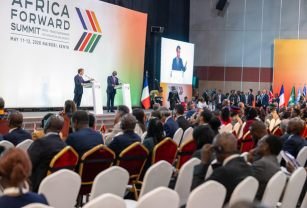
Africa Forward 2026 Summit Yields 11-Point Framework and €23 Billion Investment Pledge
Leaders from more than 30 African countries and France have adopted a comprehensive declaration aimed at reshaping relations between the continent and its European partner through principles of mutual respect, shared responsibility and joint development.
According to details released following the Africa Forward 2026 Summit held in Nairobi, the document establishes an 11-point framework that seeks to position Africa as an active contributor to global innovation and economic progress rather than a recipient of traditional assistance.
The two-day inaugural summit, co-hosted by Kenyan President William Ruto and French President Emmanuel Macron at the Kenyatta International Convention Centre, concluded on May 12 with the formal adoption of the Nairobi Declaration.
The gathering brought together African heads of state, African Union representatives, international financial institutions, business executives and innovators under the theme “Africa–France Partnerships for Innovation and Growth.” It marked the first time France has convened such a high-level event in an English-speaking African nation.
President Ruto described the declaration as a practical roadmap for inclusive progress. The full text emphasises African-led solutions to continental challenges while leveraging the region’s growing demographic and resource strengths. The declaration’s 11 pillars address key priorities ranging from peace and security to digital transformation.
On security matters, participants endorsed stronger backing for African Union-led peace operations, including predictable financing under UN Security Council Resolution 2719. They also called for reform of the UN Security Council in line with the Ezulwini Consensus and Sirte Declaration to ensure fairer African representation.
The document further tackles transnational threats such as terrorism, cybercrime and illicit financial flows, linking stability to youth empowerment and broader economic opportunities. In the area of agriculture, the declaration commits to building climate-resilient and industrialised value chains.
Emphasis is placed on agro-processing, integration with the African Continental Free Trade Area, sustainable fertiliser access, and support for smallholder farmers, women and young people through improved finance and digital technologies. Health sovereignty forms another central element.
Leaders pledged to advance universal health coverage, enhance pandemic preparedness, and expand local production of vaccines and medicines through institutions such as the Africa CDC and the African Medicines Agency. The framework promotes integrated “One Health” strategies that connect human, animal and environmental well-being.
On energy and industrialisation, the declaration prioritises renewable sources including geothermal, hydropower and green hydrogen, alongside regional power grid connections and local beneficiation of critical minerals. It supports “Made in Africa” clean technology manufacturing while aligning with the Paris Agreement and continental climate goals, with particular attention to technology transfer.
Additional pillars cover the blue economy, responsible digital transformation and artificial intelligence with inclusive access for women and youth, reform of the international financial system to give Africa greater influence at institutions like the IMF, education and skills development, infrastructure expansion, full implementation of the AfCFTA, and cross-cutting empowerment of young people and women.
The final point stresses collaborative implementation involving governments, private investors and civil society. Beyond the policy framework, French President Macron announced €23 billion in new commitments, comprising €14 billion from French public and private sources and €9 billion from African investors.
These funds target energy transition, digital infrastructure, the maritime economy and agriculture, with anticipated benefits in job creation across participating countries. The summit occurs against a backdrop of evolving Africa-France relations. France has adjusted its approach in recent years following withdrawals from parts of the Sahel region, seeking broader and more equitable engagement with willing partners.
Kenyan authorities presented the event as an “Africa Forward” initiative, reflecting the continent’s determination to shape its future through mechanisms such as the AfCFTA and Agenda 2063.
The document repeatedly highlights African agency, value addition in resources and commodities, and the need to move beyond raw material exports. It maintains historical ties while encouraging diversification of international partnerships.
President Ruto has accepted an invitation from President Macron to attend the upcoming G7 Summit in France, where elements of the declaration are expected to inform discussions on African priorities.
