
Opposition MPs Stage Dramatic Walkout as Ramaphosa Faces Renewed Pressure Over Phala Phala Scandal
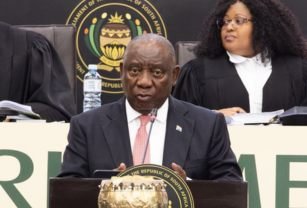
South Africa’s National Assembly was thrown into disarray on Thursday when opposition members from the uMkhonto weSizwe Party, Economic Freedom Fighters and African Transformation Movement walked out of the chamber in protest during President Cyril Ramaphosa’s scheduled question-and-answer session.
The lawmakers, some dressed in camouflage uniforms, sang struggle songs and accused the president of being a constitutional delinquent before leaving the floor entirely, insisting that impeachment motions linked to the long-running Phala Phala scandal should take priority over routine business.
The disruption occurred just days after the Constitutional Court delivered a landmark ruling on May 8 that revived impeachment proceedings against Ramaphosa. Speaker Thoko Didiza declared the walkout out of order and pressed ahead with the session, but the opposition MPs had already exited, refusing to participate.
The incident, captured on widely shared video footage, has once again thrust the Phala Phala matter into the national spotlight and highlighted the deep fractures within the country’s political landscape. The scandal dates back to February 2020, when burglars broke into Ramaphosa’s private Phala Phala game farm in Limpopo province and stole roughly $580,000 in foreign currency.
The money had reportedly been hidden in furniture after the sale of Ankole cattle to a Sudanese buyer. Ramaphosa has always maintained that the funds came from legitimate private business dealings and involved no public money or criminal activity. Yet the controversy escalated when questions arose about whether the incident was properly reported to police and tax authorities at the time.
What turned the affair into a full-blown constitutional crisis were later allegations of a possible cover-up. In 2022, former State Security Agency head Arthur Fraser laid criminal charges, claiming that presidential protection personnel had been involved in suppressing the matter.
An independent Section 89 panel, chaired by former Chief Justice Sandile Ngcobo, subsequently found prima facie evidence suggesting that Ramaphosa may have violated his oath of office, exposed himself to a conflict of interest and acted unlawfully in his handling of the break-in. In December 2022, the ANC-dominated National Assembly voted against referring the panel’s report to an impeachment committee, effectively halting the process.
However, the Constitutional Court ruled on May 8 this year that the vote and the parliamentary rule underpinning it were unconstitutional. The apex court ordered Parliament to establish a full impeachment inquiry, stating that lawmakers could not short-circuit the process at such an early stage.
This decision has now given fresh momentum to opposition efforts to hold the president accountable. Ramaphosa responded swiftly to the court judgment. In a televised address on May 11, he firmly rejected calls for his resignation, stating that nothing in the ruling compelled him to step down. He announced plans to challenge the original Section 89 panel report through judicial review and insisted he had committed no crime.
Despite the mounting pressure, the president has remained defiant, reaffirming his commitment to serving out his full term while emphasising his focus on pressing national issues such as economic recovery and service delivery. In the wake of the ruling, Parliament’s whips have agreed to establish a 31-member impeachment committee to review the panel’s findings and determine whether formal proceedings should proceed.
The African National Congress will hold the majority of seats on the committee, with representation from other parties including the Democratic Alliance, MK Party and EFF. While the committee’s deliberations are expected to generate considerable political heat, observers caution that its ultimate impact may be limited given the ANC’s continued dominance in the National Assembly following the 2024 elections and the formation of the Government of National Unity.
This latest parliamentary drama reflects the increasingly polarised environment in South Africa since the 2024 polls. The Government of National Unity, formed after no single party secured an outright majority, has brought together former rivals in an uneasy coalition. Opposition parties frame the Phala Phala issue as a fundamental test of constitutional accountability and the rule of law, arguing that the president’s handling of the matter raises serious questions about transparency at the highest levels of government.
Yet the scandal continues to divide opinion. Supporters of Ramaphosa maintain that the matter stems from a private business transaction and that opposition parties are exploiting it for political gain rather than pursuing genuine accountability. Critics, meanwhile, contend that the failure to report the theft promptly and allegations of involvement by presidential security personnel point to a troubling lapse in leadership standards.
As the impeachment committee begins its work, further delays appear likely. Ramaphosa’s planned judicial review of the original panel report could extend the timeline, while opposition parties have vowed to push aggressively for full scrutiny. The process is also unfolding against a backdrop of urgent national challenges, including slow economic growth, persistent energy shortages and widespread dissatisfaction with service delivery.
The Phala Phala scandal, now stretching across more than six years, has become emblematic of broader tensions between executive power, judicial oversight and opposition scrutiny in Africa’s most advanced democracy. For ordinary citizens, the saga raises fundamental questions about whether those in positions of leadership are truly held to the same standards as everyone else. As Parliament reconvenes and the impeachment committee begins its deliberations, the eyes of the nation remain fixed on how the process will unfold.
Ramaphosa continues to insist that he has done nothing wrong and remains focused on governing. Yet the file on Phala Phala is far from closed, and the latest parliamentary drama serves as a vivid reminder that accountability remains a live and contentious issue in South African politics. Whether this renewed scrutiny leads to meaningful outcomes or simply becomes another chapter in the country’s long-running political polarisation will depend on how all parties conduct themselves in the weeks ahead.
