
Japan Establishes New Task Force to Mitigate Economic Impact of Middle East Conflict
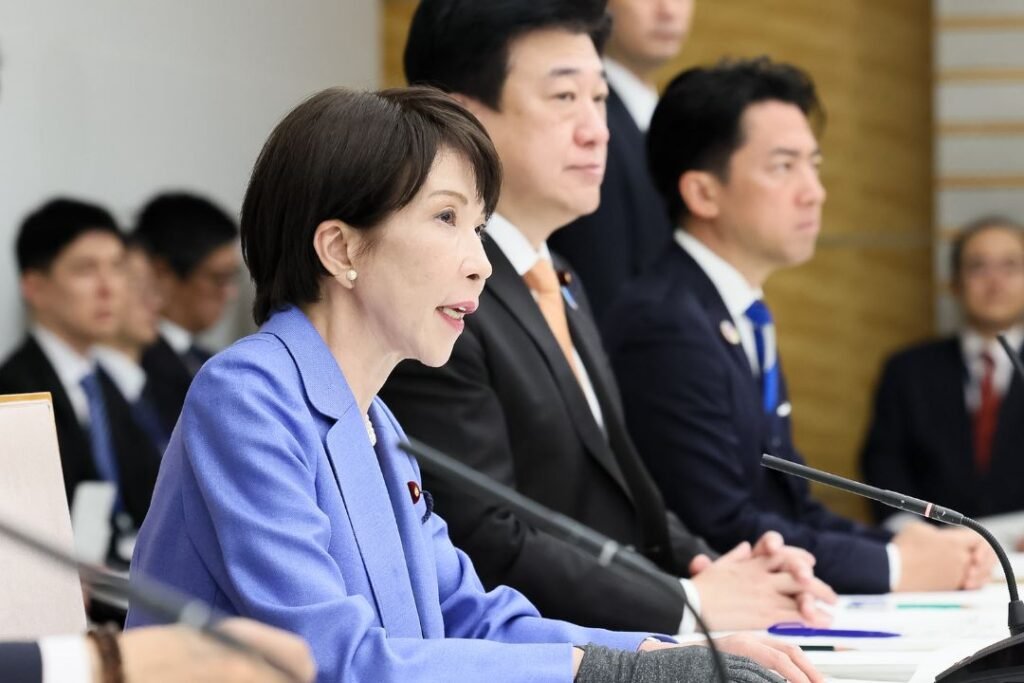
Japan Prime Minister Sanae Takaichi has announced enhanced diplomatic efforts and strengthened domestic measures following the second ministerial meeting on the Middle East situation held at the Prime Minister’s Official Residence today.
The meeting reviewed Japan’s ongoing response to the escalating conflict and its impact on energy security and daily life. In her summary, the prime minister highlighted concrete progress on both the international and domestic fronts.
Takaichi reported that she had personally contacted the leaders of the Marshall Islands, Malaysia, and the Philippines to secure their support for a joint statement on safe navigation in the Strait of Hormuz. The Marshall Islands have already expressed their intention to participate.
She also held discussions with International Energy Agency Director General Fatih Birol on March 25, confirming continued cooperation that could include additional coordinated oil releases. Further talks are scheduled with the leaders of Indonesia later on March 31 and with France on April 1.
The prime minister stressed that Japan will continue aggressive diplomatic engagement at all levels to help bring the Middle East situation to an early resolution and ensure the safety of Japanese nationals.
On the domestic side, the government’s emergency measures are showing results. Subsidies for gasoline, diesel, and heavy oil introduced on March 19 have successfully lowered the national average gasoline price from a peak of 190.8 yen per liter on March 16 to 170.2 yen as of March 30. Japan has also begun releasing oil from its strategic reserves as planned, and alternative procurement routes are advancing. A tanker that bypassed the Strait of Hormuz successfully arrived in Japan on March 28.
Despite these steps, localized fuel shortages have affected buses, ferries, trucking companies, factories, fishing, and agriculture. The government has already restored supplies for route buses in Kyushu and certain submarine cable-laying vessels. Prime Minister Takaichi instructed the Minister of Economy, Trade and Industry to carefully address consumer concerns reported through the dedicated information window.
Particular emphasis was placed on protecting essential non-energy petroleum products used in medical care, agriculture, and packaging. The prime minister ordered close coordination between the Ministers of Economy, Trade and Industry and Health, Labour and Welfare to guarantee uninterrupted supplies of critical medical items, including blood transfusion packs, pharmaceuticals, dialysis circuits, syringes, gloves, and aprons.
Recognizing the vulnerability of certain medical products manufactured in Asia using Middle Eastern petroleum derivatives, the government is conducting a nationwide inspection of resin consumables. Officials confirmed there is no immediate risk of disruption and are accelerating efforts to secure alternative global sources.
To improve overall coordination, Takaichi appointed Minister of Economy, Trade and Industry Akazawa as the “Minister in Charge of Ensuring the Stable Supply of Critical Goods in Relation to the Middle East Situation.” A new Task Force, consisting of director-general level officials from relevant ministries, was formally established today under Minister Akazawa within the Cabinet Secretariat.
The task force has been directed to conduct a comprehensive review of supply chains for critical goods potentially affected by the Middle East situation and to develop specific policy measures to ensure stable supplies, taking into account both domestic needs and overseas production links.
The outcome of the meeting signals Japan’s determination to balance proactive diplomacy aimed at securing safe maritime routes with robust domestic measures to shield the economy and essential services from the effects of the ongoing conflict.
