
Gambia Appoints British Barrister Martin Hackett as First Special Prosecutor for Jammeh-Era Atrocities
The Gambian government has appointed British barrister Martin Hackett as the country’s first Special Prosecutor to investigate and prosecute grave human rights abuses committed during the 22-year rule of former President Yahya Jammeh.
Attorney General and Minister of Justice Dawda A. Jallow announced the appointment on April 8 during a press briefing at the Sir Dawda Kairaba Jawara International Conference Center in Bijilo.
Hackett, selected from a competitive international pool of candidates, will head the newly established Special Prosecution Office. He is expected to arrive in The Gambia and assume duties before the end of April under a four-year renewable mandate.
The Special Prosecution Office was created by the Special Prosecutor’s Office Act 2024, one of two key laws passed last year to implement recommendations from the Truth, Reconciliation and Reparations Commission. Hackett’s office will focus on prosecuting approximately 70 individuals identified by the commission as most responsible for systemic crimes. It will work alongside a planned Special Criminal Division of the High Court for lesser offences and a potential hybrid Special Tribunal for the most serious international crimes.
Yahya Jammeh seized power in a 1994 military coup and ruled until his defeat in the December 2016 presidential election. After initially refusing to concede, he was forced into exile in Equatorial Guinea by a regional ECOWAS military intervention. His regime was marked by widespread repression, including enforced disappearances, extrajudicial killings, torture, rape and other serious violations.
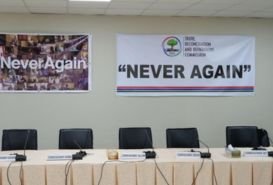
The Truth, Reconciliation and Reparations Commission, established in 2017, heard testimony from nearly 400 witnesses and documented roughly 240 to 250 state-sponsored killings. Its 2021 final report recommended prosecutions, reparations, institutional reforms and guarantees of non-recurrence.
Notable cases documented by the commission include the 2004 assassination of journalist Deyda Hydara, the 2005 massacre of more than 50 West African migrants, and atrocities committed by the notorious “Junglers” paramilitary death squad directly linked to Jammeh.
Martin Hackett brings more than 30 years of international legal experience to the role. He has prosecuted complex war crimes cases, including at the UN-backed Special Tribunal for Lebanon, and has investigated crimes committed during the Kosovo conflict.
Gambian officials describe him as possessing the necessary expertise for these sensitive, high-profile prosecutions.
Meanwhile, the Special Prosecution Office is expected to operate with an annual budget of approximately $2.5 million. While the government has committed initial funding, additional support will be sought from international partners.
The United Nations Development Programme and the European Union are already assisting with the construction of the office’s headquarters and efforts to build domestic forensic capacity. Hackett will submit annual reports to the President, the National Assembly, ECOWAS and the Attorney General to ensure transparency and regional oversight.
The appointment comes after years of criticism over the slow pace of implementing the Truth, Reconciliation and Reparations Commission’s recommendations. As of mid-2025, only a fraction of its 263 recommendations had been fully realised, though legislative groundwork and phased reparations payments have begun.
Some perpetrators have already faced justice abroad under universal jurisdiction. Jammeh, now 60, has denied all wrongdoing and refused to cooperate with the commission. His continued exile in a non-extradition country presents a major challenge, but the Special Prosecution Office’s mandate allows for flexible approaches, including potential trials in absentia.
Victims and civil society groups have welcomed the appointment but stressed that prosecutions must complement, not replace, reparations and institutional reform. Many survivors have expressed frustration that financial compensation, while important, cannot substitute for full accountability.
