
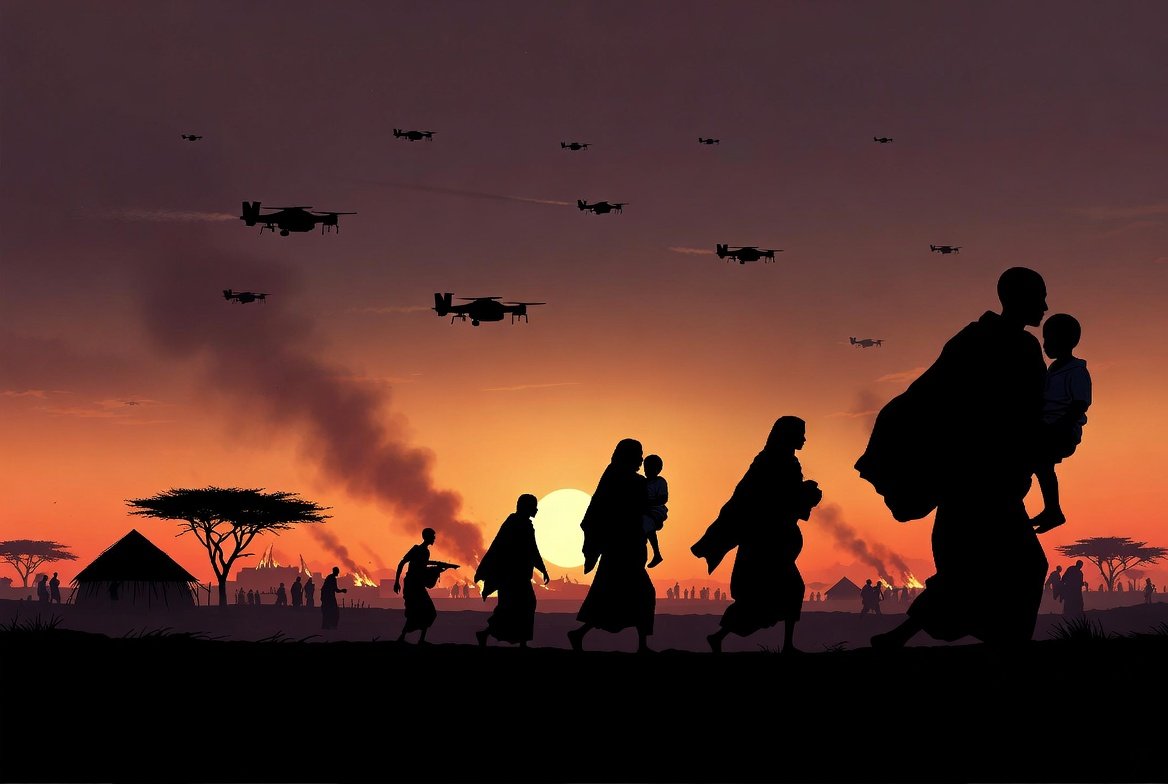
Nearly 700 Civilians Killed in Sudan Drone Strikes Since January, UN Reports
Nearly 700 civilians have been killed in drone strikes across Sudan since January, the United Nations has reported, highlighting the devastating human cost of the civil war that is now entering its fourth year.
According to UN humanitarian chief Tom Fletcher, the majority of these deaths occurred in the first three months of 2026, with near-daily drone attacks reported in various conflict zones.
The strikes have particularly affected regions such as Kordofan and Darfur, where fighting between the Sudanese army and the paramilitary Rapid Support Forces remains intense. The UN children’s agency has warned that drones are responsible for a large share of child casualties, with attacks frequently hitting homes, markets, and schools.
This has added a new layer of horror to an already catastrophic situation, as civilians bear the brunt of the ongoing violence. The war between Sudan’s army and the Rapid Support Forces has killed tens of thousands of people and displaced more than 11 million others. Entire communities have been uprooted, while famine conditions continue to spread across parts of the country.
More than 19 million people are now facing acute hunger, according to UN agencies, as food, fuel, and basic supplies become increasingly scarce. The International Committee of the Red Cross has reported that over 11,000 people have been listed as missing since the conflict began, a figure that has risen sharply in the past year.
Destroyed communication networks have left families without news of their loved ones, compounding the psychological toll of the war. The United Nations has described Sudan as the world’s largest humanitarian crisis, with nearly two-thirds of the population in need of aid.
Despite reaching millions of people, relief efforts remain severely underfunded. Officials warn that continued fighting, combined with rising costs linked to global instability, could push even more people into hunger and deepen an already catastrophic situation. The drone strikes have become a particularly worrying feature of the conflict.
Unlike traditional ground battles, these aerial attacks often occur without warning, striking civilian areas and causing widespread fear and displacement. Humanitarian workers on the ground report that many families are now too afraid to leave their homes, further limiting access to food and medical care. The escalation in drone usage has also raised concerns about the changing nature of warfare in Sudan.
Both sides in the conflict have been accused of using unmanned aerial vehicles, but verifying responsibility remains difficult due to the chaos on the ground and restricted access for independent observers. International calls for an immediate ceasefire and unrestricted humanitarian access have grown louder, but so far diplomatic efforts have yielded little progress.
The African Union, the United Nations, and several regional governments continue to push for dialogue, but deep divisions between the warring parties have made meaningful negotiations extremely challenging. For the people of Sudan, the situation remains dire. Millions are struggling to survive amid widespread destruction, displacement, and hunger.
The latest UN figures on drone-related deaths serve as a grim reminder of the urgent need for a political solution to end the fighting and allow life-saving aid to reach those most in need. As the conflict enters its fourth year, the humanitarian outlook continues to worsen. Without a significant de-escalation and increased international support, Sudan risks sliding further into one of the most severe crises of the modern world.
