
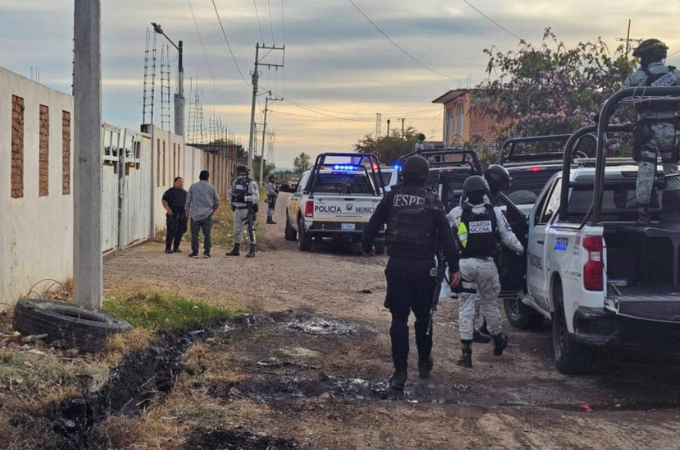
Gunmen Kill 11 at Soccer Field in Salamanca, Guanajuato, Mexico
At least 11 people were killed and 12 others wounded when gunmen opened fire on a group gathered at Campo de Futbol Cabañas, a local soccer field in Salamanca, Guanajuato, on Sunday night.
Ten victims died at the scene, while one more succumbed to injuries in hospital. Among the wounded are a woman and a minor.
Authorities have not released full details on the victims, but initial reports indicate the group included young men playing or watching an informal match, as well as bystanders. Salamanca Mayor César Prieto condemned the attack as a sign of “social breakdown” driven by criminal groups seeking to intimidate communities and urged the federal government to deploy reinforcements, citing the overwhelmed capacity of municipal police.
Context: Guanajuato’s Cartel Turf War
The massacre occurred in one of Mexico’s most violent regions. Guanajuato has been a primary battleground between the Jalisco New Generation Cartel (CJNG) and the Santa Rosa de Lima Cartel (CSRL) since 2017, with conflict centred on fuel theft from Pemex pipelines, drug routes, extortion, and local criminal economies. Salamanca, located along key pipeline corridors and highways, has repeatedly ranked among the state’s deadliest municipalities.
Sunday’s attack fits a pattern of cartel assaults on public spaces—soccer fields, bars, and markets—used to send messages, retaliate, or assert territorial dominance. Such incidents often target low-level rivals or aim to sow terror and demonstrate impunity.
National and International Implications
Mexico records over 30,000 homicides annually, with Guanajuato among the top three most violent states. The killing of 11 people at a recreational site raises concerns about civilian safety ahead of Mexico co-hosting the 2026 FIFA World Cup with the United States and Canada. Matches are scheduled in nearby León and other Guanajuato venues, prompting questions about security planning for international visitors.
President Claudia Sheinbaum’s administration has continued the “hugs, not bullets” approach while increasing National Guard deployments in high-risk zones.
Critics argue militarised responses have failed to curb violence or dismantle cartel structures. No group has claimed responsibility so far. Investigations by state and federal authorities are ongoing, with early indications pointing to cartel-related score-settling or intimidation.
