
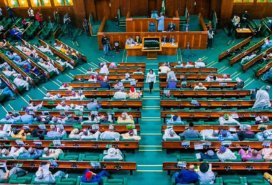
Nigeria’s House of Representatives Passes Landmark State Police Bill
Nigeria’s House of Representatives has overwhelmingly passed a constitutional amendment bill to establish State Police forces across the country, marking a significant shift in the nation’s security architecture.
On June 11, 2026, the House approved the “A Bill for an Act to Alter the Constitution of the Federal Republic of Nigeria, 1999 (as amended) to Provide for the Establishment of State Police and for Related Matters (Sixth Alteration) Bill, 2026” by a vote of 289 in favour and only one against, with 290 lawmakers present. The electronic voting system failed, forcing a manual show-of-hands count.
The bill, which moves policing from the Exclusive Legislative List to the Concurrent List, creates separate Federal and State Police structures with defined powers and oversight mechanisms. Deputy Speaker Benjamin Kalu, who chairs the House Committee on the Review of the 1999 Constitution, presented the committee’s report on the 18-clause bill.
Key provisions include allowing State Governors to appoint State Commissioners of Police (subject to confirmation by their State Houses of Assembly) and giving governors the power to issue lawful directives on public safety and law and order, while disputes can be resolved through the Nigeria Police Council. The President will continue to appoint the Inspector-General of Police on the advice of the Police Council, subject to National Assembly confirmation.
Speaker Tajudeen Abbas described the passage as a “decisive constitutional step” toward a more responsive policing system while preserving national unity. The bill includes safeguards aimed at preventing politicisation and abuse of power, addressing long-standing concerns raised by critics of state – controlled policing.
The legislation now proceeds to the Senate, which passed it at second reading on the same day, and requires approval by at least 24 of Nigeria’s 36 State Houses of Assembly before it can be sent to the President for assent. The House adjourned for recess until July 7 after the vote.
The development reflects years of advocacy by state governors, security experts, and civil society groups frustrated with the limitations of the centralised federal police system in tackling terrorism, banditry, kidnapping, and communal conflicts. Proponents argue that state police will enhance local intelligence, rapid response, and community-oriented policing. If enacted, it would represent one of the most far-reaching constitutional reviews since Nigeria’s return to democracy in 1999.
