
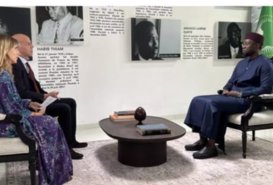
Ousmane Sonko: “No Blank Cheque” for Senegal’s President as Political Rift with Faye Deepens
Ousmane Sonko, President of Senegal’s National Assembly and former Prime Minister, has insisted there is no irreparable rift with President Bassirou Diomaye Faye despite their very public falling out, while making clear he will not give the executive a “blank cheque” and will vigorously exercise parliamentary oversight.
In a wide-ranging interview with RFI and France 24 broadcast on June 15, 2026, Sonko addressed the tensions that led to his dismissal as Prime Minister less than a month ago. He downplayed suggestions of a personal quarrel that could divide the country, stating Senegal is “greater than any political differences.”
However, he accused the current government of betraying key commitments made to voters during a decade in opposition under the PASTEF project, particularly on economic sovereignty and debt management.
Sonko, a central figure in Senegal’s recent political transformation, defended his record as Prime Minister and said his focus now is on strengthening the National Assembly’s role. “There is no blank cheque being given to the President of the Republic and the government,” he said, while adding that the Assembly will not obstruct the executive for political score-settling. He stressed that censorship remains a constitutional tool the legislature can use if necessary, but the current priority is allowing the new government to establish itself.
On the country’s substantial national debt, Sonko revealed a more nuanced position than in the past. While he previously opposed drastic restructuring, he said the situation must now be assessed objectively. He criticised the IMF’s approach and reiterated his long-held view that part of Senegal’s debt qualifies as “odious debt” because it was contracted without proper approval by the National Assembly. However, he stopped short of demanding immediate cancellation, saying the government must prioritise the country’s long-term interests.
Regarding the controversial university crisis in February, during which a student was killed, Sonko acknowledged a “disproportionate use of force” by security services based on images he had seen. He defended the need to maintain public order and protect public buildings but said the conduct of operations on the ground is not the Prime Minister’s direct responsibility. An investigation is ongoing, he noted.
On the law increasing penalties for homosexuality, Sonko firmly defended Senegal’s sovereignty. He clarified that the legislation itself is not new – dating back to the Senghor era and rejected accusations of a “witch hunt.” He highlighted concerns about intentional transmission of HIV as a factor in some cases and said Senegal does not need to justify its laws to the West. “We are a sovereign country,” he stated.
Sonko also addressed speculation about the 2029 presidential election, saying it is “far too early” to discuss any candidacy. He declined to speculate on whether President Faye would seek re-election, saying each man has his own path.
