
Keir Starmer Announces Resignation as UK Prime Minister
Sir Keir Starmer has announced he will step down as Labour leader and Prime Minister, setting in motion an orderly transition that is expected to conclude with a new leader in place by early autumn.
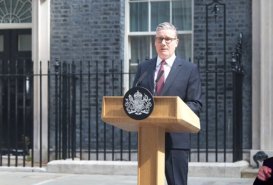
In an emotional statement delivered outside 10 Downing Street this morning, Starmer said he had accepted that he is no longer the best person to lead the party into the next general election. His wife Victoria stood beside him as he reflected on his time in office and thanked those who had supported him through a period of intense internal pressure.
Starmer told reporters he had spent the weekend at Chequers reflecting on his position following last week’s decisive by-election victory for Andy Burnham in Makerfield. More than 100 Labour MPs had publicly urged him to set a timetable for departure amid recent local election setbacks, cabinet resignations, and growing unease over the pace of delivery on key promises.
In his statement, Starmer highlighted what he saw as his main achievements: rescuing Labour from a dire state after the 2019 defeat, removing antisemitism from the party, restoring economic credibility, and securing a landslide victory in 2024. “Every decision I have taken has been about putting the country I love first,” he said. “That is why I will resign.”
He described his wife as “my rock” and said he now looked forward to focusing on his role as a father. Starmer will remain in office as a caretaker prime minister until the new leader is elected.
Andy Burnham, the popular Mayor of Greater Manchester who was sworn in as an MP today, is the clear frontrunner to succeed him. Nominations for the leadership contest are expected to open in early July, with the process aiming to conclude before Parliament returns in September and ahead of Labour’s party conference.
The development comes after months of mounting criticism within the party over tax rises, perceived slow progress on “change”, and a sense of disconnection from traditional Labour voters in some regions. Supporters credit Starmer with stabilising the economy and strengthening defence commitments following the 2024 election, while critics argue the government failed to deliver the scale of transformation it promised.
This will be the sixth UK prime minister in roughly a decade, underlining the volatility that has characterised British politics in recent years. Labour’s substantial parliamentary majority means there will be no immediate general election, allowing time for a smooth internal handover.
Reactions have begun pouring in from across Parliament and the public, with many acknowledging the difficult but dignified nature of Starmer’s exit. The coming weeks will now focus on the leadership race and the direction the next prime minister intends to take the country.
