
President Tinubu Transmits State Police Bill to Senate as Lawmakers Pledge Swift Passage
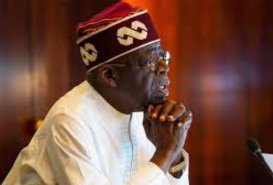
President Bola Tinubu has formally transmitted the State Police Bill to the National Assembly, triggering what could become one of the most significant constitutional reforms in Nigeria’s security architecture in decades.
The proposed legislation, titled “Constitution of the Federal Republic of Nigeria (Alteration) State Police Bill, 2026,” seeks to amend the 1999 Constitution to create a legal framework for the establishment of state police services across the federation. Senate President Godswill Akpabio immediately referred the bill to the Senate Committee on Constitution Review, chaired by Deputy Senate President Barau Jibrin, and directed that a report be submitted on Wednesday for accelerated consideration.
Akpabio assured Nigerians that the Senate would incorporate strong safeguards to prevent abuse by governors and other political actors. He described the bill as a historic step toward decentralising policing and bringing security closer to the people. “Since 1960, Nigeria has not had the courage to decentralise policing. This is the first time we are taking that step,” he said, adding that communities possess vital local intelligence that centralised policing often misses.
Senate Leader Opeyemi Bamidele urged bipartisan support for the bill, describing it as a national issue that transcends party and regional lines. He appealed to senators to ensure full attendance for the crucial constitutional amendment vote, which requires a two-thirds majority.
The bill is widely seen as a direct response to Nigeria’s escalating security challenges, including banditry, kidnapping, and insurgency, which have overwhelmed the centralised Nigeria Police Force. Governors have renewed demands for substantial control over appointments, operations, and funding of state police commands, arguing that true federalism requires states to have meaningful authority over local security. Some have expressed concern that the proposed 3 per cent allocation from the Federation Account may be insufficient even for basic salaries and operations.
Deputy Speaker of the House of Representatives, Benjamin Kalu, who described the bill as a “legacy initiative” of President Tinubu, said the House had already passed it with 289 votes. He emphasised that the current policing model, designed before independence, is outdated for a country of over 230 million people spread across 923,000 square kilometres. Kalu also revealed that the National Assembly is advancing a constitutional amendment to make security funding a first-line charge on the national budget.
Debate on the bill in the Senate was, however, deferred on Tuesday following the announcement of the death of House of Representatives member Hon. Yaya Tongo of Gombe State. Lawmakers observed a minute’s silence and adjourned in his honour.
The transmission of the bill marks a major milestone in Nigeria’s long-running debate on state policing. Successive governments and constitutional conferences have considered the idea but failed to implement it. If passed by both chambers and ratified by the required number of state assemblies, the reform would fundamentally reshape security governance in the country by creating a dual policing structure comprising federal and state commands.
